




Fracture Fixation Techniques
By
Why would you need a Fracture Fixation?
Fractures, or broken bones, can happen to anyone at any age. When a bone fractures, it requires proper medical attention and treatment to heal correctly. Fracture fixation techniques are procedures orthopedic surgeons perform to align and stabilize fractured bones, allowing them to heal effectively. In this article, we will explore the different fracture fixation techniques commonly used today. Our goal is to shed light on these procedures in a simple and easy to understand manner. The primary goal of these fixation techniques is to aid in restoring strength and mobility.
4 Most Common Fracture Fixation Techniques
1. Casts and Splints: Traditional Methods of Immobilization
One of the most common fracture fixation techniques is casts and splints. These non-surgical approaches involve immobilizing the fractured bone using a plaster cast or a splint of rigid or flexible materials. Casts and splints provide stability and support, preventing movement at the fracture site. They are particularly effective for fractures that are not displaced or require minimal realignment.
The duration of cast or splint immobilization varies depending on the type and location of the fracture Typically ranging from a few weeks to several months. Casts are commonly used for wrist, forearm, and ankle fractures. Splints are used for fractures that may require adjustments during the healing process, such as certain types of foot or hand fractures.
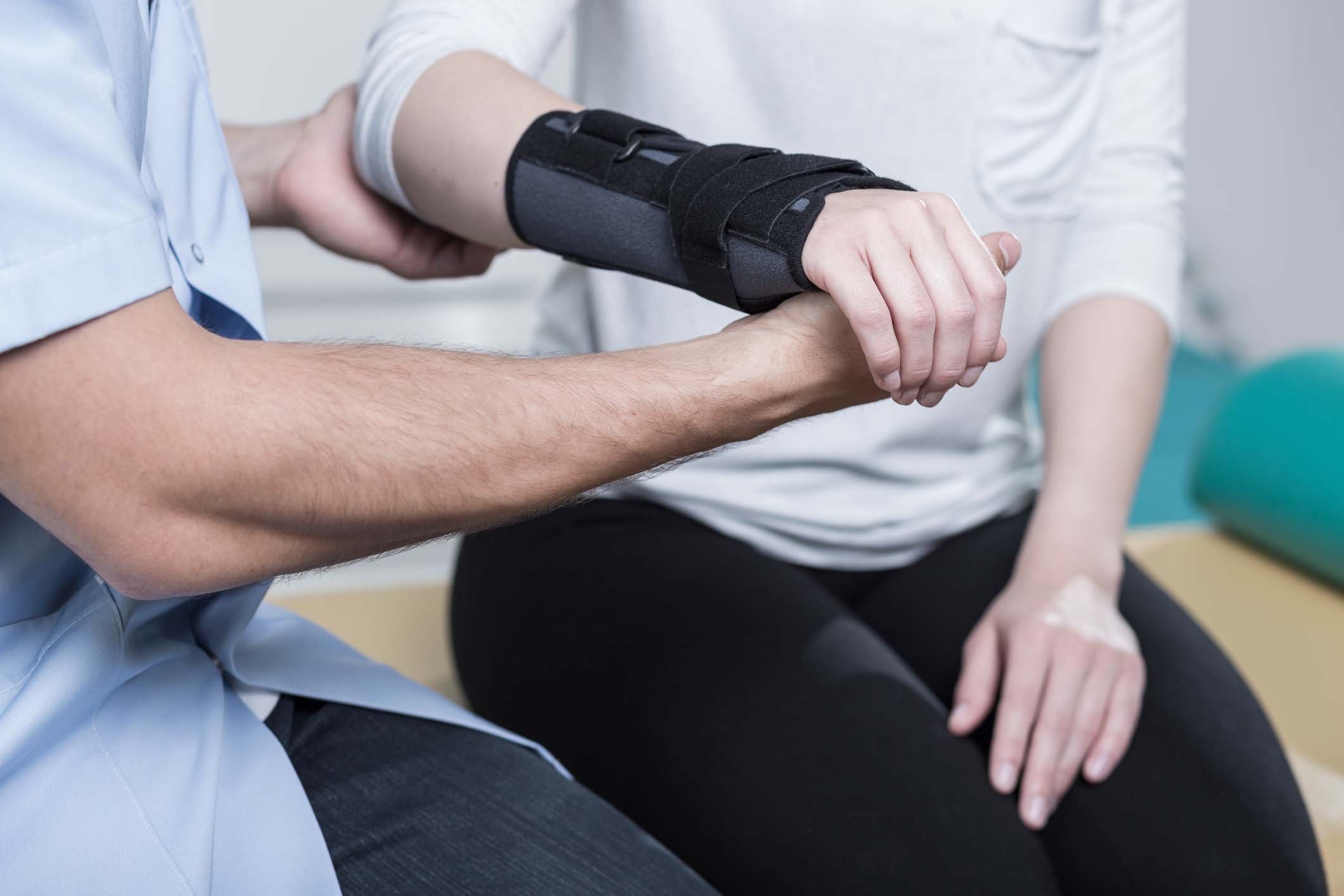 Woman getting a Splint
2. External Fixation: Stabilizing Fractures from the Outside
External fixation is a fracture fixation technique involving external devices to stabilize and align fractured bones. This technique is used in complex fractures or cases where open surgery may not be feasible. During the procedure, metal pins or wires are inserted into the bone on either side of the fracture. These pins or wires are then connected to an external frame, which holds the bone properly. External fixation allows for proper healing while providing access to the wound for cleaning and dressing changes. This technique is commonly used in fractures with severe soft tissue damage, multiple fragments, or requiring gradual realignments. They are common in pelvic fractures or fractures with open wounds.
3. Internal Fixation: Restoring Bone Alignment from Within
Internal fixation is a surgical technique involving implants, such as screws, plates, or rods, to stabilize fractured bones. Unlike external fixation, which stabilizes the fracture from the outside, internal fixation addresses the fracture from within the body. The surgeon makes an incision to expose the fractured bone, realigns the fragments into their correct position. They then use implants to hold them in place. Internal fixation can provide immediate stability to the fracture. They allow for early mobilization and reduced healing time. The type and number of implants used depend on the location and complexity of the fracture. Sometimes, the implants may be removed once the bone has healed sufficiently.
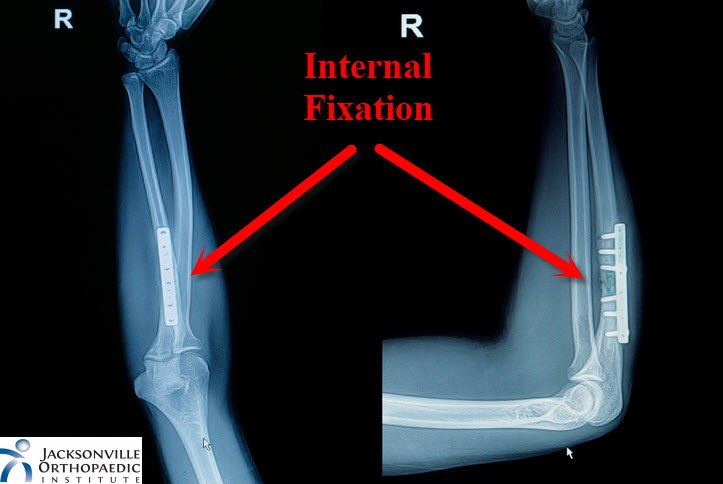 X-Ray of an Internal Fixation
According to the American Academy of Orthopaedic Surgeons (n.d.b.), “internal fixation allows shorter hospital stays, enables patients to return to function earlier, and reduces the incidence of nonunion (improper healing) and malunion (healing in improper position) of broken bones.” Internal fixators are commonly used for fractures that require precise alignments and stable fixation. Such as fractures of long bones like the femur, tibia, or humerus, as well as fractures around joints like the hip or shoulder.
4. Minimally Invasive Techniques: Precision with Small Incisions
Advancements in surgical techniques have led to the development of minimally invasive fracture fixation procedures. These techniques involve using specialized instruments and imaging guidance to perform precise repairs through smaller incisions. Minimally invasive procedures offer several advantages, including reduced soft tissue damage, faster recovery, and less scarring.
Examples of minimally invasive fracture fixation techniques include percutaneous pinning, in which pins are inserted through the skin and into the bone to stabilize the fracture, and arthroscopic-assisted fracture fixation, which combines small cameras and instruments to repair certain fractures. These techniques are often used for fractures that can be treated with less invasive methods, like hand, foot, or clavicle fractures.
Fracture Fixation is Essential!
Fracture fixation techniques are essential in treating broken bones, providing stability and support for proper healing. Each approach has its role in managing fractures, from traditional casts and splints to external and internal fixation methods. Advances in surgical techniques have also introduced minimally invasive options, improving patient outcomes and recovery time. Remember, if you experience a fracture, it is crucial to seek medical attention promptly to ensure appropriate treatment and successful recovery.
Written By: Katie Stallings OT
Related Articles:
Book an Appointment with The Jacksonville Orthopaedic Institute Today!
JOI Physicians continue to offer online new patient appointments. This is another option to make it more convenient to make new patient appointments with less phone hold times. Follow the link below to select your JOI MD and schedule online.
New to JOI, you can now schedule your follow up appointments and cancel appointments on the JOI Portal.
To make appointments with JOI Rehab, please call 904-858-7045.