

Total hip replacement surgery is one of the most reliable orthopedic procedures, and for many people, it restores mobility, eliminates pain, and helps individuals return to their daily lives. While this surgery is highly successful, hip implant failure can occur due to wear and tear or injury. When this happens, a hip revision surgery may be necessary.
What Is Hip Revision Surgery?
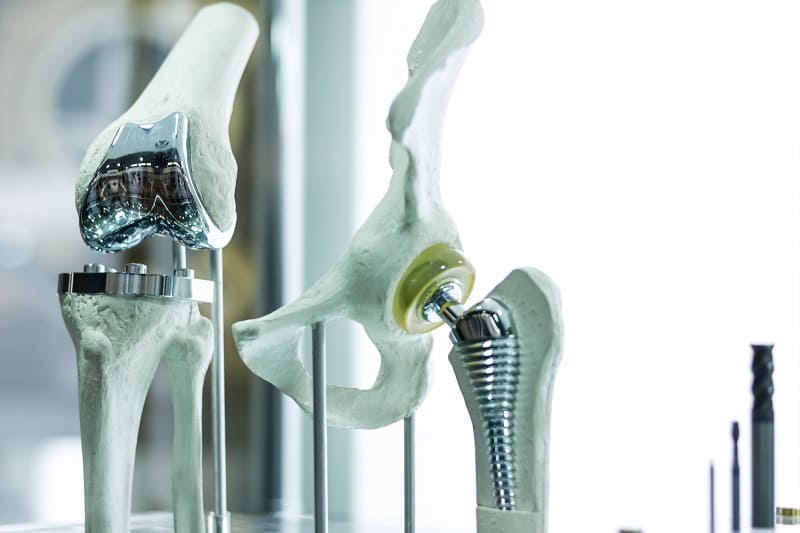
Hip revision surgery, sometimes referred to as a revision total hip arthroplasty, is a procedure that repairs or replaces parts of the previously implanted hip joint. While the original hip replacement involves removing damaged bone and cartilage, a revision focuses on correcting issues of the original implant that may have occurred due to wear and tear or injury.
There are a variety of reasons why a hip revision surgery may be necessary, some procedures being more difficult than others.
Why Do Hip Implants Fail?
While hip implants are built to last 15+ years, several factors can lead to hip implant failure. Here are the most common causes:
1. Wear and Tear
Over time, the ball and socket surfaces of the hip joint can wear down, causing loosening or debris buildup that irritates surrounding tissues. Younger patients tend to experience wear and tear sooner because of their activity levels.
2. Implant Loosening
An implant becoming loose is one of the most common causes of hip revision surgery. This can occur due to normal wear, bone loss (osteolysis), or if the implant never fully bonded with the bone after the original surgery.
3. Dislocation
A hip joint that dislocates frequently can indicate an improperly positioned implant or that the soft tissue has weakened around the joint.
4. Infection
Bacteria can lead to infections either shortly after the surgery or many years later. A common infection is the prosthetic joint infection, caused by bacteria attaching to the surface of the hip implant. Antibiotics alone are usually not enough, and in most cases, part of the implant needs to be removed.
5. Fracture
Many factors can lead to a fracture, like osteoporosis (bone weakening), a fall, or an accident. When a fracture occurs near the hip implant, hip revision surgery may be necessary to repair the bone and install a new prosthesis.
6. Implant Defects or Recalls
While it is rare, manufacturing defects like metal issues or component failures can lead to implant recalls. Patients who have a recalled prosthesis may need revision surgery to prevent complications.
Signs and Symptoms of Hip Implant Failure

Depending on the cause, implant failure symptoms can develop slowly over time or happen suddenly.
- Groin, thigh, or buttock pain that increases over time
- Instability
- Decreased mobility or difficulty walking
- Swelling, redness, or warmth around the joint
- Clicking, grinding, or popping sensations
- Limping
- Hip dislocation
- Fever or chills can indicate infection
It is important to remember that while these are symptoms of hip implant failure, it doesn’t always mean failure has occurred. Always discuss your symptoms with your orthopedic specialist.
Diagnosis: Identifying Hip Implant Failure
1. Physical Examination
Your physician will assess your range of motion, gait, and signs of instability or infection.
2. Imaging/Scans
Your doctor may order imaging tests like X-rays, CT scans, or MRIs.
- X-rays will show the implant position, fractures, or bone loss.
- CT scans can provide a detailed view of the bony and complex structures.
- MRI scans are used to evaluate soft tissue and swelling.
3. Laboratory Tests
Blood tests are typically ordered to detect infection or metal ion levels. Joint fluid aspiration may also be ordered to determine bacterial presence.
4. Implant History Review
After completing the physical exam, imaging, and laboratory testing, your surgeon will discuss the implant model, age, any known issues, recalls, longevity data, or compatibility concerns.
Hip Revision Surgery: During the Procedure
Since there is a wide variety of causes of hip implant failure, the procedure technique and style will vary from patient to patient. Here are the general steps to a hip revision surgery:
1. Incision
The surgeon will begin by opening up the hip area by making an incision to access the joint and remove scar tissue.
2. Removing The Old Implant
The damaged or loose components are carefully removed. If the bone has grown around the implant, the procedure time may increase and require more specialized tools.
3. Bone Loss Management
Bone loss is common during revision surgery. Surgeons may use bone grafts to rebuild the damaged areas.
4. Placing the New Implant
Implants used during revision are usually larger, longer, and more specialized.
5. Correcting Soft Tissue Issues
The surgeon will repair or rebalance tendons and ligaments to improve stability.
6. Closure
After the hip is stabilized and moves properly, the incision is closed.
Risks and Challenges: Hip Revision Surgery
While the success rates are high, there are still risks and challenges that can occur during recovery.
- Infection
- Blood clots
- Nerve injury
- Implant dislocation
- Leg length differences
- Pain
Depending on the patient’s health and medical history, the likelihood of complications can increase.
Recovery from Hip Revision Surgery
Compared to the original surgery, hip revision typically takes longer to perform and has a more demanding recovery.
1. Hospital Stay
Most patients stay in the hospital for 2-4 days for postoperative care. More complex cases may require a longer stay.
2. Rehabilitation And Physical Therapy
Physical therapy will begin very soon after the surgery to focus on:
- Improving strength
- Improving range of motion
- Learning healthy walking mechanics
- Protect the new joint from dislocation
3. Weight-Bearing Restrictions
Depending on the patient’s history and the complexity of the surgery, they may need to limit weight on the surgical side for several weeks.
4. Long-Term Expectations
Once healing is complete, patients experience significant improvements in their daily lives. Since each case is different, it is important to follow your doctor’s recommendations to improve the outcome of the surgery.
Jacksonville Orthopaedic Institute: Hip Replacement Revision Jacksonville
JOI Physicians continue to offer online new patient appointments. This is an easy option to make it more convenient to make new patient appointments. Contact us today to set up an appointment with a JOI physician.