
“
Tennis Elbow
Please watch this informational video on Tennis Elbow Treatment.
Your diagnosis from your physician is in layman’s terms called Tennis Elbow. It is a painful inflammation that affects the tendons that attach to the bone on the outside (lateral) part of the elbow. The place that the tendons of the forearm muscles attach is called the lateral epicondyle, hence the name lateral epicondylitis.
Lateral epicondylitis or “tennis elbow” is the most common injury at the elbow. The name is somewhat of a misnomer as rarely is tennis the cause. It occurs most often between the ages of 30 and 50, and is found more frequently in the dominant arm.
What Are The Causes of Tennis Elbow?
The causes of tennis elbow can vary- the most common cause is a cumulative or degenerative overuse of the wrist extensor muscles, in particular the Extensor Carpi Radialis Brevis or ECRB. This can be an acute repetitive activity, such as painting a room or a gradual onset after years of use. Although less common, tennis elbow can also be caused by an acute trauma to the outside of the elbow (called the lateral epicondyle) that can damage the tendon and lead to symptoms of tennis elbow. This article will explain how physical therapy can help with tennis elbow.Can therapy help Tennis Elbow
Symptoms of Tennis Elbow
Symptoms of tennis elbow usually involve lateral or outside elbow pain that can radiate into the forearm and wrist. Pain is usually with:
- gripping
- lifting
- basic everyday activities
Symptoms usually have a gradual onset of pain, progressing with activity.
At the beginning of onset the pain is minimal and usually just during activity. Patients often tend to “work through” the pain instead of resting which can lead to the progression of damage to the tendon, until the pain can be severe enough to limit all activities. This is one time where pain is a useful guide – if it hurts, don’t do it. Rest and activity modification are the most effective treatments.
To understand how to effectively treat tennis elbow you need understand the anatomy and mechanics of the ECRB and how to modify your activities to decrease force on this muscle. If these symptoms do not match your own, you may be experiencing another injury. Shoulder or elbow tendonitis could be a possibility.
Tennis Elbow Anatomy
Tennis Elbow Anatomy
The ECRB muscle originates above the elbow and crosses the elbow joint traveling down the forearm to attach at the base of the index finger. This muscle is responsible for extending and deviating the wrist, but can be active with elbow motion as well. While this muscle creates wrist extension, the muscle is also active when you are flexing and gripping your wrist and hand. This is because the muscle co-contracts or stabilizes the wrist, so that you have a support from which to grip from.
Often the extensor muscles (ECRB) are weaker than the flexor (grip strength) and can create a muscle imbalance and more stress on the ECRB muscle. This explains why most patients complain of pain with gripping activities such as shaking hands, lifting groceries, etc. Because this muscle crosses more than one joint (the elbow and wrist) the forces on the muscle vary based on the position of the elbow and wrist. When your elbow is bent and the wrist is extended the muscle is in a very shortened position and little stress is placed on its attachment sites when it contracts.
However, when the elbow is extended while the wrist is flexed, the muscle is then being stretched and a contraction at this position would put significantly more force at its attachment site. This stress causes small micro tears of the tendon. These micro tears cause small amounts of swelling and pain and if micro trauma continues the tears can become larger causing the tendon quality to decrease and fray.
Can Therapy Help Tennis Elbow?
The quick answer to the question is absolutely. Physical therapy can certainly help prevent and treat your tennis elbow. It can also help to make sure that this injury does not come back! We might even improve your tennis game with improved strength in your wrist, elbow and shoulder.
Treatment at JOI for Tennis Elbow
Treatment for tennis elbow is largely activity modification. Avoiding stress to the ECRB by avoiding picking up objects with the palm down and elbow straight is key. Common things to avoid are:
- reaching over a car seat to grab a bag
- stretching around the desk to reach the phone
Try to always lift with the wrist in neutral and the elbows bent. A stretching program is also very helpful. Painful muscles often tend to spasm or tighten up. If a muscle is tight, it will place more force on its attachment sites when you try to stretch the muscle. We can offer some stretches developed to help slowly stretch the forearm muscles. The key to remember is that the stretch should:
- last at least 20-30 seconds to have a lasting effect
- should not be a very painful activity
Remember that these should be pain-free. Please perform stretches 2-3 times each, 3-4 time per day and perform strengthening 1 time per day if pain-free for at least two days.
Tennis Elbow Exercises
• Straighten elbow as far as possible without pain. Using opposite hand gently bend wrist down until you feel a light stretch.
Tennis Elbow Stretch
• If too painful perform with elbow bent and or palm rotated towards center instead of down
• To progress, make a loose fist and rotate palm down and even out into full pronation Tennis elbow treatment
• Straighten elbow as far as possible without pain.
• Using opposite hand gently extend wrist until you feel a light stretch.
• If too painful perform with elbow bent and or palm towards floor Tennis elbow surgery
• Using a soup can, thera-band, therapy bar or light weight lift hand up and slowly lower back down.
Tennis Elbow Wrist Strengthening
• Make sure elbow is bent close to 90 degrees and palms are towards the ceiling
• Perform 3-5 sets of 10 repetitions Exercises for tennis elbow recovery
• Using a soup can, thera-band, therapy bar or light weight lift the hand up and slowly lower back down.
• Make sure elbow is bent close to 90 degrees and the palm is towards the floor
• Perform 3-5 sets of 10 repetitions Lateral epicondylitis exercise
• Grip a light stress ball, therapy bar, or therapy putty and squeeze
• Pull and grip for approximately 5-10 minutes
When in the acute stages, modalities that can help decrease the inflammation can be helpful. This can include:
- anti-inflammatory medication
- laser therapy,
- Graston Technique
- ice massage
- electrical stimulation
When more chronic, some will recommend moist heat, Laser or ultrasound (a deeper heat) to the muscle to help increase the blood flow and extensibility of the muscle. Some studies have also found that using a form of electrical stimulation call High Volt Galvanic can increase tendon healing. Wrist braces can help keep you from extending the wrist as often and rest the muscle. Counter force straps are also marketed for helping tennis elbow, although actual results vary greatly. This is a band that is placed over the muscle belly about 1.5 inches down from the elbow joint. It is should be snug enough to act as a reminder to not contract the muscle, but not compromise blood-flow to the area.
If you are active in racket sports, such as tennis, you need to make sure your racket is fitted properly to avoid extra stress on the ECRB, and you are often recommended to avoid sports for 4-6 weeks, if symptoms are severe. Once you have been pain-free for at least two weeks you can begin a very gentle progressive strengthening program for the wrist. The key is again to start slowly and avoid pain. The elbow should always be bent to allow less stress to the ECRB and the focus is on endurance (light weight and high reps) rather than heavy strengthening. If the above treatments are not helpful, your doctor may recommend a steroid injection.
While the injection itself is not comfortable, steroids help take away the swelling and decrease the pain around the tendon insertion. Steroid injections are very effective at relieving the pain, but if activity is not modified the symptoms will often return. Most doctors will limit the number of injections to avoid further damage to the tendon. In a very few cases, injections and conservative measures are not helpful and surgical debridement is needed.
Physical Therapy for Tennis Elbow
Physical therapy for elbow pain can be very effective. There are different treatments for the various sources of elbow pain. A proper stretching and strengthening program is needed for those who have tennis elbow. Often, a lack of flexibility and strength are the causes for this condition. Ergonomic education is important in treating elbow pain, as the source of most of the pain comes from how people grip objects and overuse injuries. Laser therapy and Graston are also very successful in the treatment of tennis elbow. We hope to have shown you in this article, that physical therapy can certainly help you with Tennis Elbow.
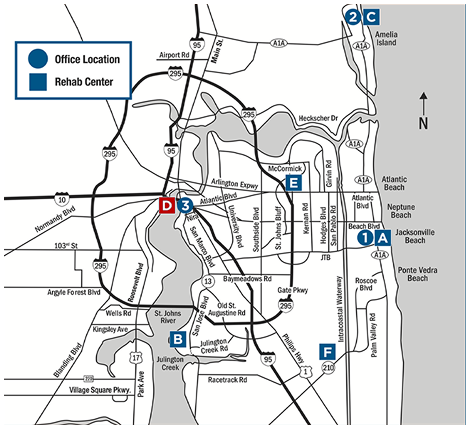
Please call 904-858-7045 to schedule at one of the JOI Rehab Centers. Where The Pro’s Go!
Laser Therapy for Tennis Elbow
Learn more about Direct Access to Physical Therapy at JOI Rehab.
Related Articles: Golf Elbow Braces and Tennis Elbow Braces.
To schedule an appointment for a JOI Tennis Elbow Orthopedic Specialist, please call 904-JOI-2000, schedule online or click below.
”