
By: Ehren Allen, DPT, Certified Orthopedic Manual Therapist
Hip Anatomy
Hip anatomy is complicated and includes many structures. The hip area includes the pelvis and the actual hip joint. There are numerous muscles which pass through that area. These include the hip flexors, hip adductors, hip rotators, and the gluteal muscles. The sciatic nerve passes behind the hip joints and there are numerous ligaments which supports the pelvis and hip. If you would like to learn more about the anatomy of the hip, please go to this video on the anatomy of the hip.
 Image of hip anatomy
The gluteal muscles are responsible for stabilizing the hip and pelvis in standing. They extend the hip joint and hold the pelvis level while standing on one leg during a normal walking pattern. The gluteal muscles and hip external rotator muscles are vital to stabilizing the leg and controlling normal knee movements.
 Image of the muscles of the hip
The Hip External rotator muscles include some large and small muscles. The small external rotator muscles include:
- Obturator Internus
- Gemelli (superior and inferior)
- Quadratus Femoris
- Piriformis
The Gluteus Maximus also helps to rotate the hip externally but its main job is to extend the hip.
The Hip Abductors Include:
- Gluteus Medius
- Gluteus Minimus
- Piriformis
The hip abductors are a vital muscle group with controlling knee, hip and low back movements. Strengthening the hip abductors is a vital component to a comprehensive strengthening program.
What is a Hip Flexor Strain?
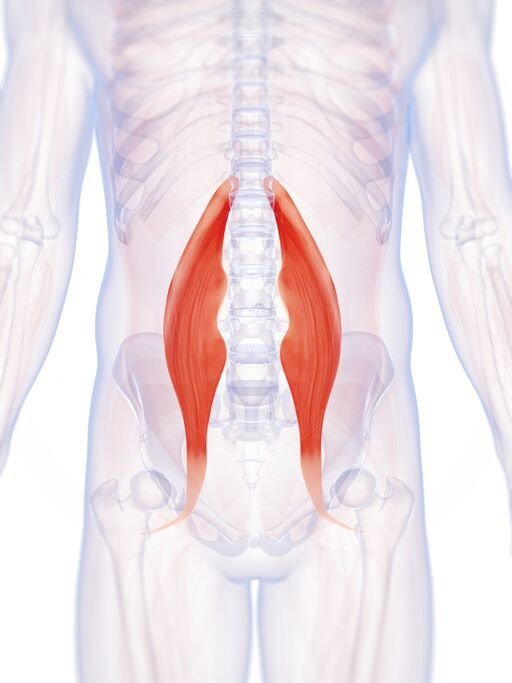 Image of hip flexors
A painful hip flexor or tendonitis of the hip flexor are common issues among athletes. Sprinting and running require increased force on the hip flexor which can lead to a strain in the muscle or tendon. The major hip flexor muscles are the iliopsoas muscles. They run from the front of the lumbar spine and pelvis to the lesser trochanter of the femur which is on the inside near the top of the thigh bone.
Is the hip a bone or a joint?
This hip is a joint where the thigh bone (femur) meets the pelvis. It is a ball and socket joint which allows movement in multiple planes of movement. The socket of the hip (acetabulum) is deep. This make the hip more stable than other ball and socket joints. Please read this article to learn more about the bones of the hip.
What is the ball in your hip called?
The quick answer is the ball in the hip is called the head of the femur. It fits into the acetabulum which is the socket in the pelvis. The ball is held into the socket by a series of ligaments. There is also a rim around the edge of the socket made of cartilage. This rim is called the Labrum. The Labrum helps to deepen the socket and add stability to the hip joint. If the labrum is torn, it can cause pain and catching in the hip joint with certain movements. Orthopedic specialists may X-ray the hip to assess for bony issues or fractures. Hip experts may also order and MRI with contract to assess for labral injuries.
Where is the hip bone located?
When resting a baby on the “hip” or placing your hands on your hips, these are not actually the hips. Many refer the iliac crest of the pelvis as the hip. The hip is lower and the actual hip joint is deep in the pelvis. When there is pain in the hip joint, it is usually in the groin region. Pain in the back of the hip region is often actually referred from the Low Back.
The Piriformis is often blamed for Leg and sciatica pain. This is actually rarely truly the source. Spine specialists often report that sciatic pain near the piriformis is a result of the close proximity of the nerve to the piriformis muscle. Sciatica pain is usually referred from the lower back.
If you would like to learn more about Hip Anatomy, back of the leg anatomy, or knee anatomy, check out these educational videos.
Best Hip Stretches
To learn more about the best hip stretches with pictures, please go to this article: Hip Stretches. Our goal at JOI is to help you with your hip pain.
Learn more in these related articles:
- Hip Exercises That You Can Do at Home
- Direct Access to JOI Rehab Physical Therapy
- Acetabular Fracture
What Do I Do If I Have Hip Problems?
The quick answer is to go to JOI!. The Jacksonville Orthopedic Institute is the area’s leader in treating hip problems. We offer ASAP Care so that you can be seen quickly for your hip pain. If you need physical therapy for your hip problem, give JOI Rehab a call at 904-858-7045.
To schedule an appointment with a Orthopedic Hip Specialist, please call 904-JOI-2000, schedule online or click the link below.